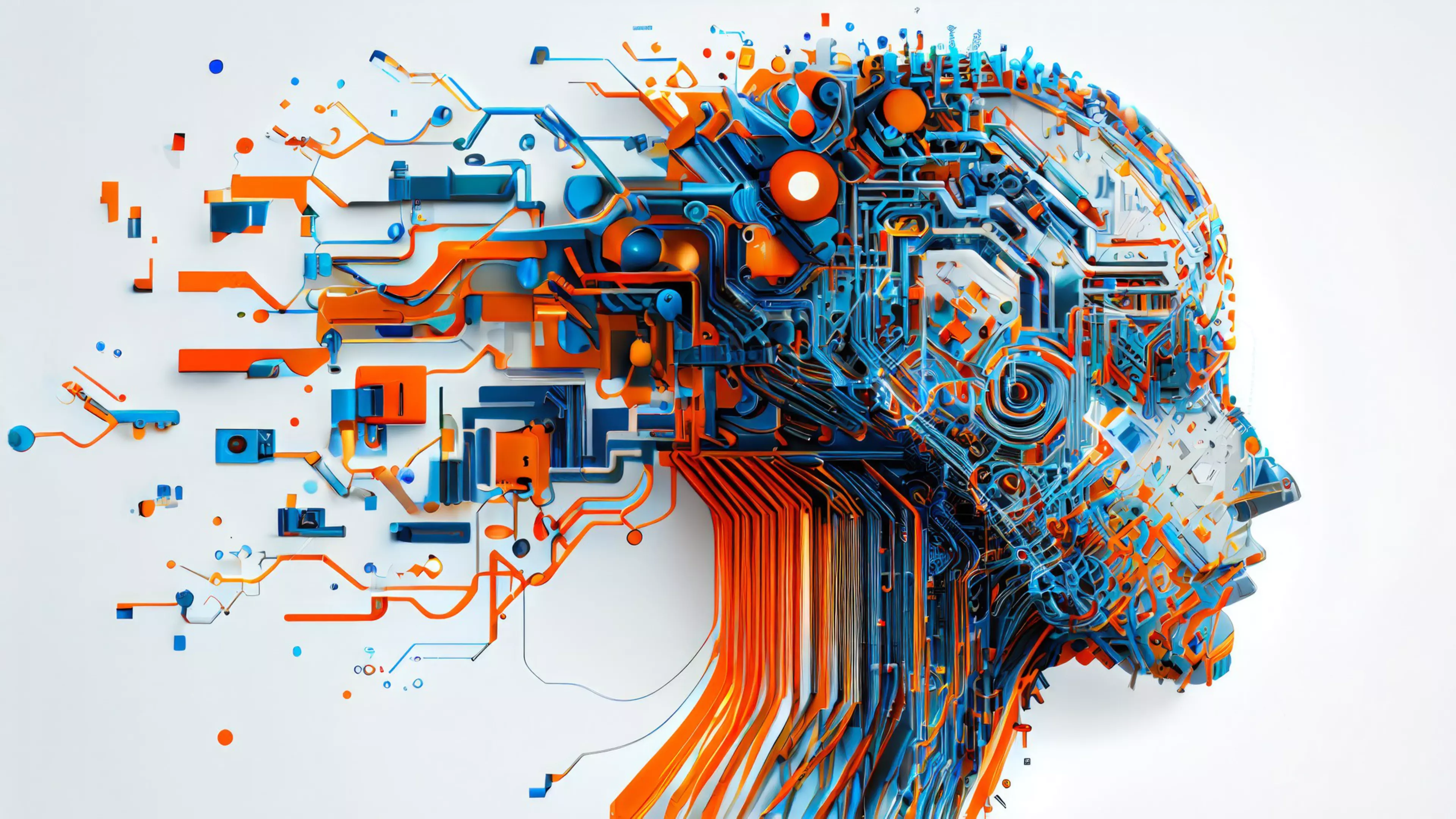
The presence of Artificial Intelligence (AI) in our daily lives operates both unconsciously, through personalised recommendations, smart home automation, and communication tools, and consciously, when we actively seek assistance from systems like Claude, Gemini, or Siri, seek travel directions, location searches, or ask for specific help.

Our interactions with AI are being progressively blurred between aware and unaware of the role it is playing in the decisions we make or actions we take.

The same is true in the workplace. AI is increasingly being integrated from streamlining repetitive tasks to enabling entirely new roles. It is transforming how work is performed, who performs it, and what skills are required.

In fact, The World Economic Forum’s research suggests that 39% of workers’ core skills will change by 2030.

Shifting ground

Recent findings from McKinsey echo just how quickly the ground is shifting. In 2017, only 20% of organisations reported using AI in at least one business function. In 2024, that figure was 78%.

And yet, despite the hype, most organisations are still finding their footing with 62% of organisations experimenting or piloting AI agents while 50% intend to use AI to fundamentally transform their business. Some are already seeing the gains with 64% saying AI is enabling innovation now and 80% currently targeting efficiency gains.

For many the conversation has been around the impact of AI on jobs. The more immediate and likely reality will be a re-evaluation. When AI increases productivity, organisations can consider more effective roles for team members.

The type of role is likely to be more defining than the level of skill required.

A detailed occupational analysis of the US economy scored jobs on a scale from 0 to 10 based on how much AI is likely to reshape it through both direct automation and indirect productivity gains.

It found roles that primarily interact with information (text, code, images, data) are much more exposed than roles grounded in physical reality (manual tasks, in-person services). Software developers and analysts score 8–9, while roofers and construction workers were rated 0–1.

It’s not about being “high-skilled” or “low-skilled.” It’s about whether work can be digitised.

A Case in Point: The Printing Industry

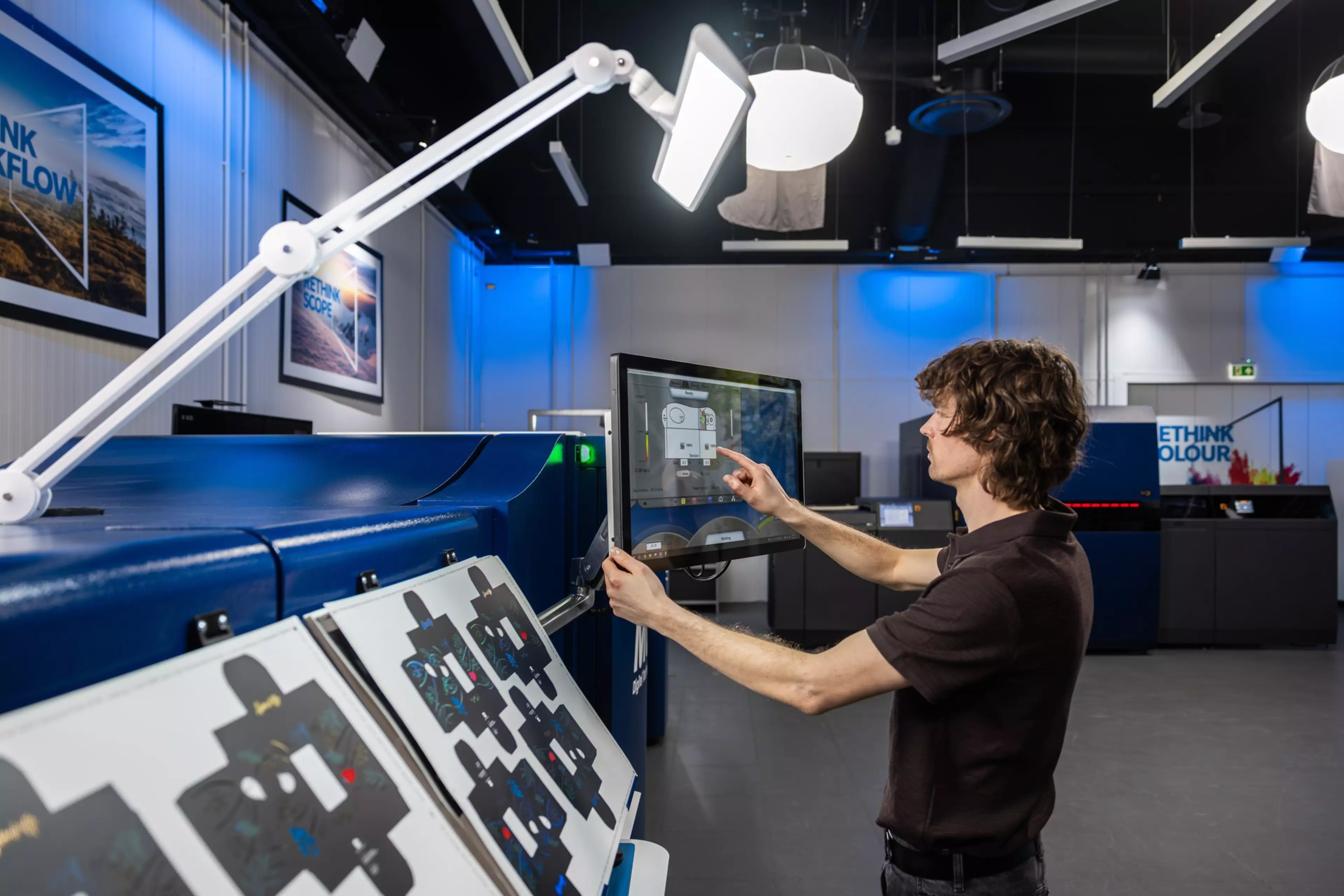
Few sectors illustrate this duality better than print. It combines digital workflows and physical production.

The former is expected to experience high exposure to AI. Print providers are using AI to automate scheduling, manage workload, optimise production, plan predictive maintenance, and enable overnight “lights-out” production. AI handles repetitive operational coordination while operators shift toward supervising automated systems, managing exceptions, and improving throughput across connected production environments.

Increasingly AI is automating prepress activities such as preflight correction, colour optimisation, layout adjustments, and variable-data composition, while intelligent inspection systems detect defects inline and reduce rework. Automated colour management and quality control systems such as Konica Minolta’s IQ-501 Intelligent Quality Care system help maintain brand consistency, reduce waste, and support faster turnaround times.

AI is enabling highly personalised and data-driven print applications through variable data printing, automated campaign execution, and dynamic content generation. Programmatic printing systems increasingly connect marketing data, automated procurement, API-based ordering, and real-time production workflows, supporting measurable, integrated, omnichannel customer engagement strategies. Customer interactions such as email-based quoting and ordering are also prime candidates for AI automation through chatbots and intelligent pricing systems.

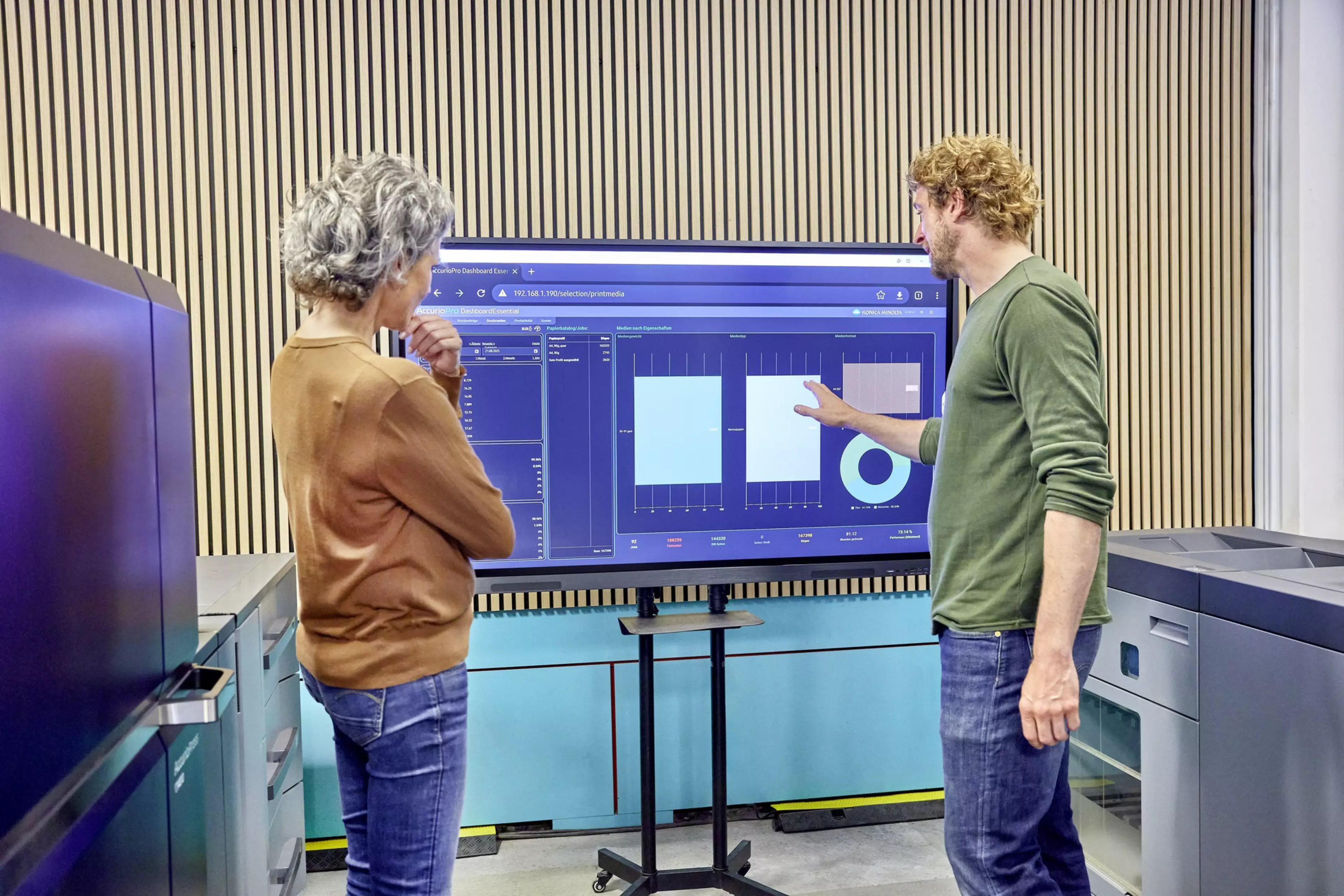
Production environments are evolving into highly flexible smart factories where cloud platforms, IoT devices, workflow automation systems, and JDF/JMF integrations connect prepress, press, finishing, and fulfillment into a single orchestrated workflow. Production planning and scheduling are increasingly driven by algorithms that optimise throughput, batching, and timing but human oversight remains essential. Real-time dashboards and analytics provide visibility into production performance, bottlenecks, and machine status across the entire operation. Konica Minolta’s  AccurioPro Flux  and AccurioPro Dashboard help organise, automate and optimise the entire print workflow as well as securely collect accurate, aggregate and analyze data.

Robotics, autonomous material handling, AI-assisted workflows, and cloud-connected production systems are being implemented to improve efficiency, reduce repetitive work, support leaner production teams, and allow employees to focus on higher-value activities.

At the low exposure end of the scale is physical production with press operators, finishing teams, and bindery specialists continuing to rely on hands-on expertise. Machines still need setup, calibration, and real time problem solving.

At Konica Minolta leveraging AI-driven technologies is helping to automate complex workflows, reduce errors, and optimize production processes. Rather than displacing employees, these innovations enable print production professionals to concentrate on quality control, client relationships, and creative services. As a result, workers are able to contribute more strategically to business outcomes, adding value beyond traditional operational roles.
AI – a work design challenge

AI is fundamentally a work design challenge. The organisations that will lead are not those that simply adopt AI tools, but those that rethink how work is structured, where human judgement adds the most value, and how teams, workflows, and skills evolve around increasingly automated environments.

The emerging picture is not one where humans disappear, but one where routine coordination, repetitive production management, and manual decision-making become increasingly automated, while human expertise shifts toward oversight, creativity, optimisation, customer value, and operational resilience. The clearest trend is the separation of work into tasks best handled by AI and automation, such as scheduling, workflow, predictive maintenance, error detection, automated finishing, and AI-driven procurement, and those where human judgement, experience, and relationships remain essential.

At the production level, the role of operators is already evolving from manual machine execution toward production supervision and exception management. Where they coordinate systems rather than execute every production step themselves. Human expertise also remains critical in areas such as brand interpretation, color-critical work, embellishment design, customer consultation, creative problem-solving, and production feasibility decisions.

When the emphasis of differentiation in print is moving away from commodity production toward value added applications such as personalization, specialty print, premium packaging, embellishments, targeted campaigns, and integrated marketing experiences, this is precisely the areas where human creativity and consultative expertise become more valuable. Customer-facing roles may evolve and print sales and account management may shift away from transactional administration toward strategic advisory work, helping brands use personalization effectively, integrate print into omnichannel marketing, design higher-value applications, and improve sustainability and supply chain performance.

There will also be a growing need for hybrid operational skill sets as print production environments become increasingly connected. Production teams will require stronger capabilities in workflow software, analytics, automation oversight, systems integration, robotics coordination, and cloud-based production environments. AI and robotics will reduce repetitive work, avoid excessive overtime, improve usability, and create more fulfilling roles for employees.

Ultimately, the future production environment will be highly automated supported by smaller, more skilled, and more digitally capable teams where competitive advantage comes from combining AI-driven efficiency and workflow  with human strengths such as creativity, operational judgement, adaptability, customer understanding, and strategic thinking.

Now is the time for print businesses to assess where AI can deliver the greatest operational and customer value and identify opportunities to remove repetitive manual processes. To explore those opportunities and more contact Konica Minolta.

Share: