Contactless payment, supermarkets without tills, safely located luggage: how will businesses make the best use of RFID technology? Find out more about how radio-frequency identification works and what its prospects are.
Many businesses consider RFID a technology of the future. The abbreviation stands for Radio-Frequency Identification. The system uses radio waves to identify RFID chips. These chips are already found in devices like credit cards and electronic car keys.
How does RFID work?
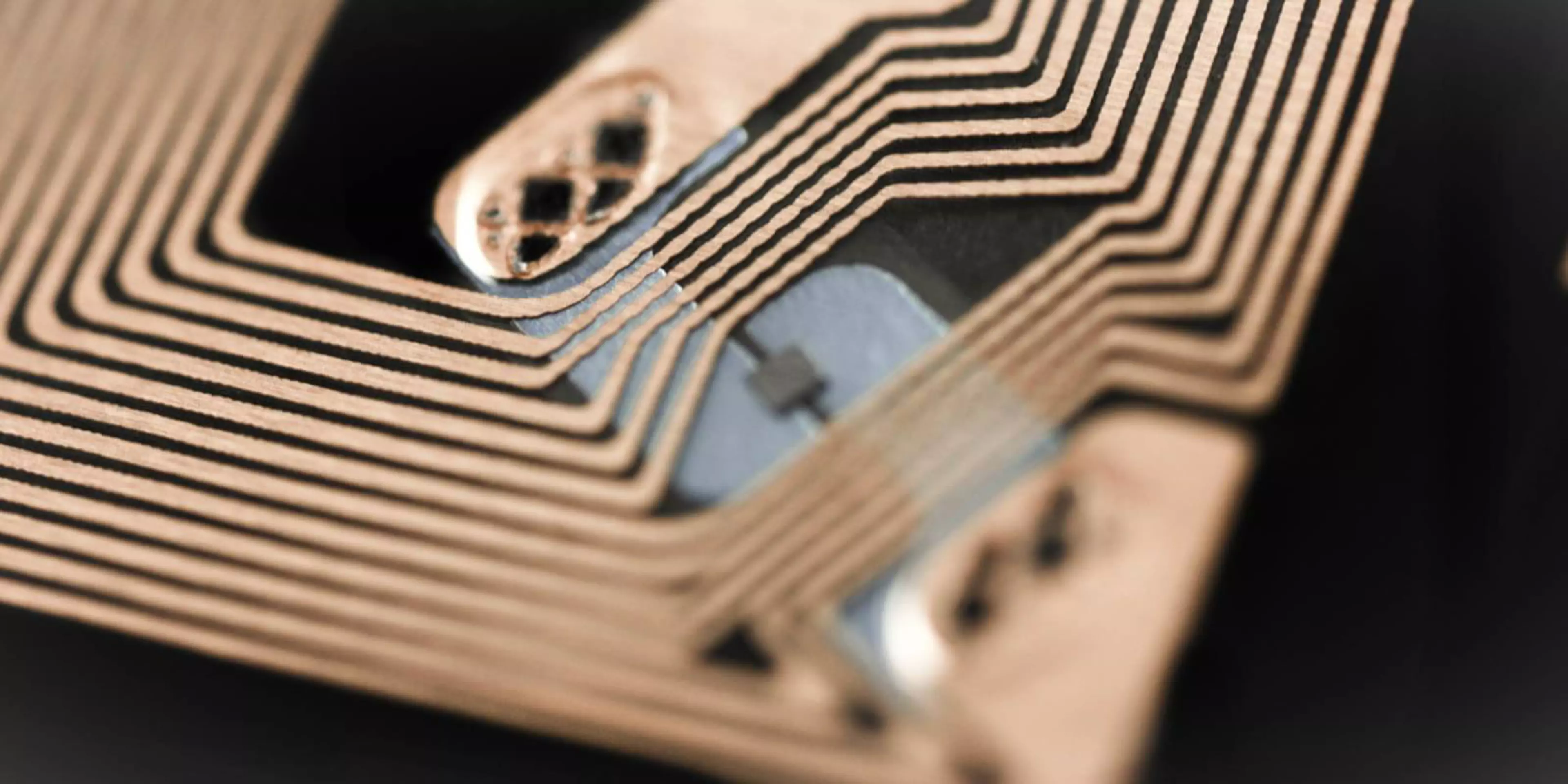
RFID systems consist of a chip, also called a tag, and a transponder, reader or scanning device. Most of the chips we use in everyday life are passive RFID chips. They are small and light with a short antenna and can be attached to goods as stickers or labels. But they can only store a little bit of information. And their range is just a few centimetres. Furthermore, passive RFID tags do not have their own power supply. To become active they need to receive radio signals from a transponder.
Then there are active RFID tags. They usually have their own power supply and can store much more data. Even without a reader they are able to send and receive data. Active tags can be as big as a book, have a bigger antenna, and their signal can reach several kilometres.
What uses are there?
RFID technology is especially widely used in production and logistics. It allows companies to track their entire supply chain easily. They can ensure things like an uninterrupted refrigeration chain, and they can identify missing goods instantly.
RFID tags also save a lot of time: goods with RFID tags can be automatically scanned just by passing transponders. Painstakingly recording every single item with a bar code is no longer necessary.
RFID systems can also help in eCommerce. Fashion companies like Zara and Gerry Weber use the technology to track products. This way RFID makes stocktaking quick and easy. Customers visiting online stores and employees in physical stores can quickly find out what goods are available. And if the chips are retrieved at the point of sale, they can be reused.
Another practical application example is Lufthansa’s HomeTag. While still at home, passengers print out the HomeTag with all the important information on it and attach it to their suitcase. At the airport, Lufthansa staff add a device containing an RFID chip. This contains all of the important luggage details. If an item of luggage is lost, it can be found quickly.
How can SMEs benefit from RFID technology?
RFID also has potential when it comes to servicing and maintaining vehicles and machines. An RFID chip can report the defective part autonomously.
Another opportunity is the mass labelling of food using RFID. Transponders can automatically scan all of the products upon exit, produce an invoice, and send it to the customer. This eliminates standing in line at a checkout. EDEKA already uses RFID technology in certain stores in Germany as a trial. Amazon too is testing the chip and reader principle in the USA.
A further attractive application of RFID for SMEs is replacing bar codes with RFID tags. Every producing business will sooner or later come up against this question of labelling its goods. On the outside, tags are hardly any different from bar codes in terms of size or weight. But RFID chips do cost a bit more. The time they save, however, can increase profits, since staff can work more efficiently. Depending on the logistical time and expense, small and medium size businesses should calculate their prospects carefully and decide whether introducing RFID technology is worthwhile.
Are there risks too?
One of the risks concerns the acceptance of RFID systems among consumers who worry most about security issues. Data can be captured, especially during card payment. Some customers are afraid their sensitive information will be misused.
But there are security solutions to this. As a rule, it is very difficult to retrieve data unless the RFID tags happen to be sending or receiving data at the time. To capture data, a scanner has to be within range of the RFID chip. The low range of passive chips makes data theft especially difficult. You can carry your cash card and car key in a shielded pouch if you want to protect it. And a shielded pouch doesn’t need to be high tech. A piece of tin foil is usually enough to prevent any unwanted communication.