
Environmental regulation is changing the way businesses think about logistics, and for the printing industry, the shift is significant.

Print production systems are often large, complex products that move through international supply chains before reaching customers. They require specialist transport, protective packaging, installation, servicing, consumables management and, ultimately, responsible end-of-life treatment.

At the same time operations are increasingly under pressure to meet customer expectations to demonstrate sustainable supply chains and provide credible data about their environmental performance. Governments and regulators are strengthening requirements around carbon emissions, waste, packaging and hazardous materials.
The logistics reality

For printer logistics teams, sustainability has to work within the realities of the business.

Equipment can be bulky, fragile and technically complex. Deliveries may require specialist handling or installation. Customers may be located across multiple sites, while service and maintenance requirements can create additional journeys.

Optimised routes can reduce fuel consumption, mileage and empty vehicle movements and businesses can consider adopting electric and hybrid delivery vehicles, alternative fuels, consolidated deliveries and greater use of local or regional distribution models.

Why environmental regulations matter in logistics

These approaches respond to the growing focus on carbon emissions, resource efficiency and waste reduction across Europe and beyond.

Customers, procurement teams and business partners are increasingly asking how products are manufactured, transported, packaged, used and disposed of. Sustainability criteria are becoming more common in tenders and supplier assessments, while businesses are under greater pressure to demonstrate progress against environmental, social and governance (ESG) commitments.

For logistics environmental performance is becoming increasingly visible. A delivery fleet, warehouse network or packaging process can influence transport-related carbon emissions, fuel and energy consumption, packaging waste, product returns and refurbishment, the treatment of used equipment and consumables and the environmental performance reported across a company's value chain.

Non-compliance can create direct financial and legal consequences, but the wider risks can be just as significant. Poor environmental performance can damage reputation, complicate customer relationships and lead to missed business opportunities.

Conversely, businesses that understand environmental requirements and build them into day-to-day operations can turn compliance into a source of competitive advantage.

IPP 2 FEEL THE POTENTIAL,  AccurioJet 30000

The industry's unique environmental challenge

The environmental impact of print cannot be considered only at the point of delivery.

The industry has a broad and complex footprint that spans the entire product lifecycle: raw materials, manufacturing, energy consumption, transportation, packaging, consumables, maintenance, reuse, recycling and end-of-life treatment.

This makes logistics a particularly important part of the sustainability conversation.

A system may travel through several stages before it reaches its final destination. It may then require regular deliveries of toner or other consumables, service visits, replacement components and, eventually, collection and responsible disposal or refurbishment.

The sustainability opportunity extends far beyond choosing a lower-emission vehicle. It involves examining how the entire logistics system operates.

Impact on printer logistics

The exact requirements vary by country and product, but several areas are increasingly important across European logistics operations.

Carbon Emissions

Transport is a major source of greenhouse gas emissions, making fleet efficiency and route planning important areas of focus. Businesses may need to consider vehicle emissions standards, reporting requirements and access restrictions in Low Emission Zones (LEZs) and Clean Air Zones (CAZs). Increasingly, customers and supply chain partners also expect businesses to understand and report the carbon impact of their operations.


Packaging Waste

Equipment must be protected against damage during transport. The challenge is to provide sufficient protection while reducing material use and improving recyclability. Businesses are increasingly reviewing packaging volume, the use of virgin materials, polystyrene and other difficult-to-recycle materials, recyclable and recycled content, packaging recovery and recycling obligations and opportunities to reuse transport packaging. 

Waste Electrical and Electronic Equipment (WEEE)

End-of-life responsibilities for printers and presses must be carefully managed. WEEE requirements can affect manufacturers, distributors and other organisations involved in placing equipment on the market or managing its disposal. The challenge is also an opportunity. Reverse logistics can support refurbishment, component recovery and recycling, helping to keep valuable materials in circulation for longer.

IPP 2 FEEL THE POTENTIAL,  AccurioJet 30000
Evoto
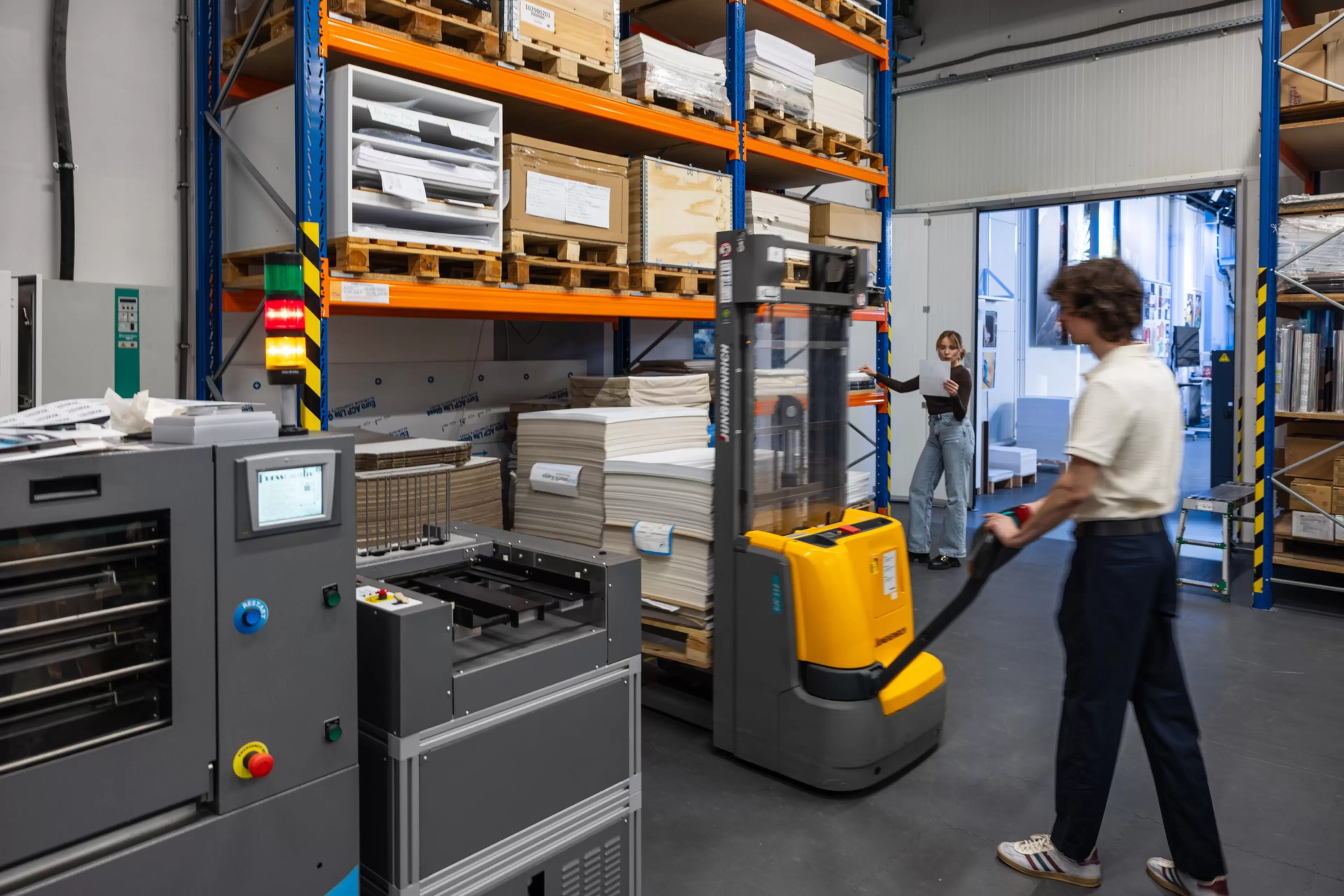
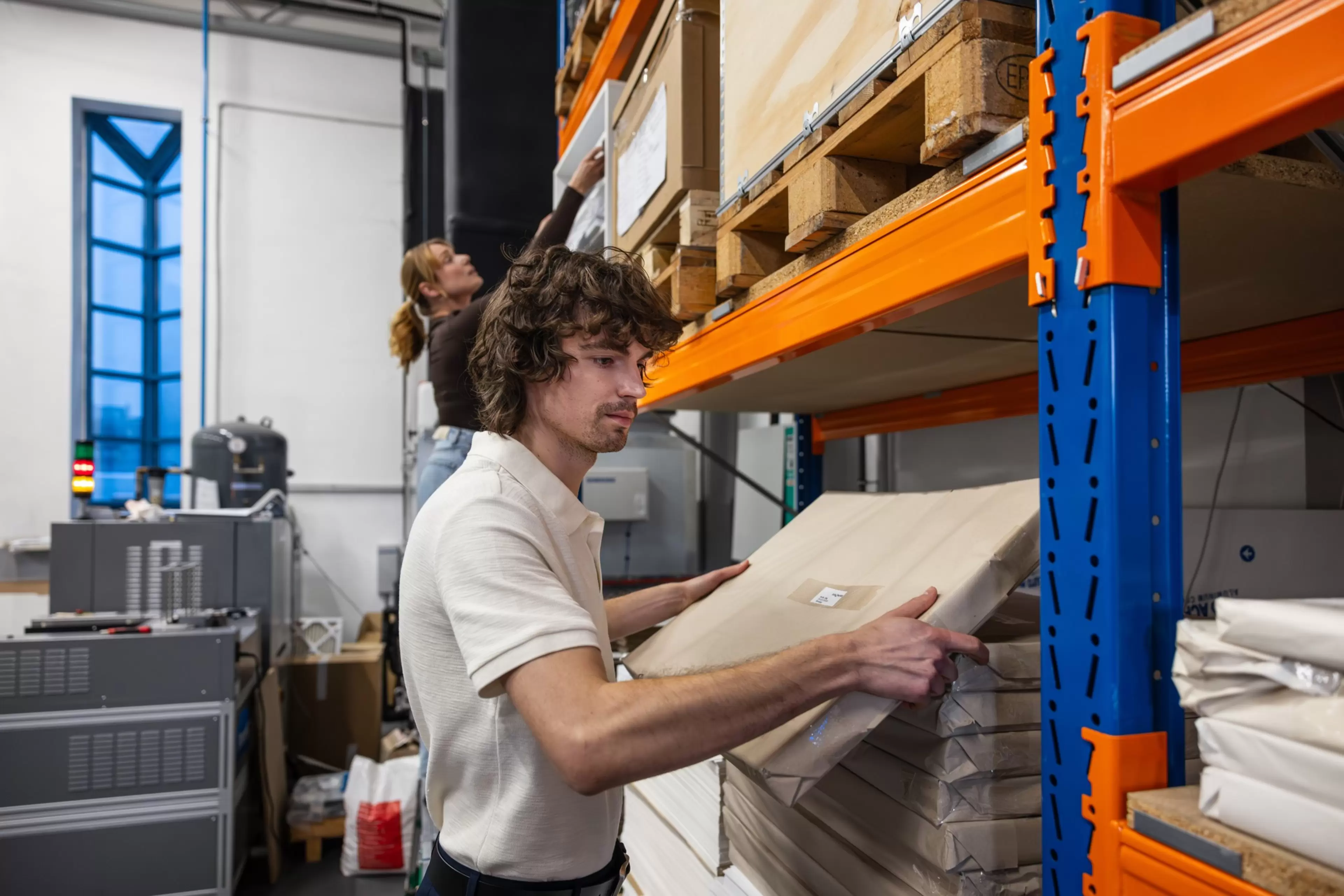
The image shows a warehouse environment where large stacks of printing materials are being organized and prepared for production. It represents efficient inventory management, print production workflows, material handling, and reliable supply chain processes that support high-quality commercial printing.

From carbon footprint to circular economy

A sustainable view of logistics should also consider how to create a more circular model. Can products be used for longer? Can equipment be refurbished? Can consumables be collected and recycled? Can packaging be reused? Can logistics networks reduce unnecessary movement and waste?

Konica Minolta has set a long-term goal to reduce absolute Scope 1, 2 and 3 greenhouse gas emissions by 90% by FY2050 from a FY2018 base year. This means addressing emissions across the value chain, including procurement, production, distribution, sales, service and product use.

Under its Consumables Recycling Program, Konica Minolta supports the collection and return of consumables for the bizhub, AccurioPrint and AccurioPress series of office and production printing systems through locally organised solutions in 23 participating European countries. Collection processes, available return options, logistics partners and accepted items may vary by country.Konica Minolta has also worked with European partners to develop a gentle, low-energy cleaning process that enables toner bottles to be refilled and reused without compromising the quality expected. Refilling and reusing toner bottles helps save resources and avoids the energy-intensive production and transportation of new bottles to Europe.

Responsible production

Responsible production means considering the quantity produced, the materials used, energy consumption, waste generated during production, the ability to recycle or recover materials and the product's overall lifecycle.

Digital printing supports a sustainable approach by helping reduce waste associated with overproduction, obsolete stock and unnecessary print runs. What is needed can be produced when it is needed. At the same time, digital workflows create new considerations around energy consumption, equipment use and electronic waste.

As part of the SuMPO Environmental Product Declaration (EPD) programme that provides third-party verified environmental information based on Life Cycle Assessment (LCA), including a product carbon footprint.

Looking beyond transport

Energy consumption is another important part of the environmental footprint of printing equipment. With the polymerised Simitri® V toner used in the bizhub i-Series, Konica Minolta has reduced the fixing temperature by approximately 15°C compared with previous models. Combined with a new fixing device, this contributes to a significant reduction in the Typical Electricity Consumption (TEC) value.  

These examples demonstrate why sustainability should not be viewed solely as a transport issue. Environmental performance is closely connected to the products being transported and the way they perform throughout their lifecycle. 

The ability to recover materials at end of life is another important consideration. Removing ink and toner from paper is critical to the production of recycled paper. Konica Minolta toners such as Simitri® HD and Simitri® V have achieved top results in the INGEDE deinking test. The AccurioJet KM-1e was the first UV ink printer to pass the deinking test on coated, single-sided printing paper 

Sustainability as a business driver 

The environmental regulations affecting printer logistics are becoming more complex. Addressing them can help create operational gains by reducing costs, improving efficiency, strengthening customer relationships and creating a more resilient logistics operation. 

The most successful businesses will take a company-wide approach to sustainability. 

If your organisation is looking to make sustainability a practical business driver, explore how Konica Minolta can help you identify the next steps towards more responsible, efficient and future-ready printer logistics. 

Share: