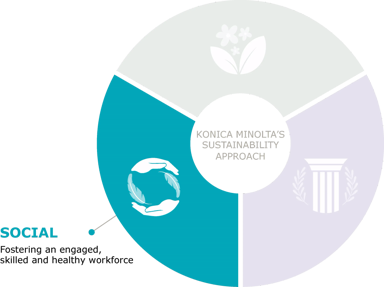
Social
Fostering an engaged, skilled and healthy workforce

We live in a changing world and human society is a big part of this evolution. With the global population having reached 8.0 billion in mid-November 2022, the way we interact with one another, with our living space and with the natural environment is more important than ever.
Key social challenges
There's scope for rapid change and resolution of social challenges, but it's an ongoing process that requires effort from everyone. Key social challenges include:
- Human rights: Although legislation and protection for under-represented groups exists in some parts of the world, there are many regions which still need to improve. For example, only 43 countries recognise homophobic crimes as a type of hate crime, and only 27 have legalised same-sex marriage.
- Modern slavery: Around 27 million people are living in slavery according to the UN Slavery Convention, which defines modern slavery as the status of a person over whom some or all powers of ownership are exercised. This needs to be addressed at all levels, including governments and commercial businesses and organisations, which have the financial influence to discourage slavery across the production and commerce sectors.
- Equal opportunities: A key consideration for societies worldwide, they include gender equality, age discrimination, and equal treatment and respect for people with disabilities. Within the EU, for example, the gender pay gap between men and women varies: the highest average discrepancy is in Latvia (women on average are paid 22.3% less) and the lowest in Luxembourg (0.7% less for women). EU figures also show that only 50% of people with disabilities are employed compared to three-quarters of people without disabilities. And 28.4% of people with disabilities are at risk of poverty or social exclusion compared to 17.8% of people without disabilities.
- Working conditions: Advances in technology have bolstered demand for hybrid working, which brings both opportunities and challenges. Research suggests that 53% of employees are more likely to prioritise health and well-being over work than before the pandemic, while 62% of leaders think that supporting new employees has become a challenge since the move to hybrid or remote work.
- Ageing population: People are living longer. The World Health Organisation predicts that between 2015 and 2050, the proportion of the world's population over 60 years will nearly double from 12% to 22%. In 2020, the number of people aged 60 years and older outnumbered children younger than five years old. This will put a greater burden on younger workers to make up the shortfall in productivity, although automation technology may help.
Social initiatives at Konica Minolta
Businesses and organisations have an important part to play in helping to protect human rights, abolish slavery and promote equal opportunities; and in ensuring workplaces continue to evolve and meet the needs of employees as well as the business.
As part of our broader ESG commitments, Konica Minolta is committed to contributing positively to its own social impact and that of its customers and partners. Our activities on human rights, equal opportunities, and working conditions are key to our commitment and include the following.
Respect for human rights
The Konica Minolta Group Human Rights Policy, based on the UN Guiding Principles on Business and Human Rights, has three key focus areas:
- Elimination of discrimination
- Consideration for employees
- Consideration for business activities, including how we maintain these standards throughout the supply chain
Equal opportunities
We want to ensure our employees can be themselves, are valued for their differences, and are supported to work at their best, no matter their gender, nationality, race, age, special ability, sexual orientation, sexual identity, religion, ethnicity, creed, capabilities, skills and values. Our European Diversity, Equity and Inclusion (DE&I) policy:
- Defines the terms to ensure a shared understanding
- Sets out the responsibilities of leaders and employees towards a diverse, equitable, and inclusive workplace
- Provides an understanding of all kinds of discrimination and their consequences
- Gives clear behaviour codes for all employees
- Proposes procedures to help
Our Global DE&I Commitment, Global DE&I Guidelines and Global DE&I Learning Path help to ensure these standards are rolled out globally.
Procedures to improve gender equality include:
- Closing the gender pay gap – our analysis of employee pay shows that there have been gender disparities, which we aim to reduce over the next few years
- Efforts to increase the percentage of women in leadership and promoting women in innovation – including the company’s Technology Innovations Programme (TIP), which now attracts 50% more female participants than when it started in 2015 and the new Woman2Lead Prgramme launched 2023.
Working conditions
We want to fully support our employees and be the employer of choice. We offer a mix of benefits and health initiatives to ensure employee wellbeing, and aim to create an environment which works for everyone, enabling them to enjoy a personal life while pursuing their professional goals.
We've introduced , designed to help employees get the most out of their journey with the company. Available on the European intranet, Flourish consists of five information areas structured to reflect the changing needs of employees at different stages of their career:
- Embed – to help employees get started
- Nurture – with feedback to employees, managers and the company
- Grow – programmes that enable employees to develop their skills and mindsets
- Thrive – where employees are supported in reaching a healthy work-life balance
- Shine – which celebrates people's success
In addition, our aims to build a healthy, safe and supportive workplace environment by implementing safety and healthcare initiatives that emphasise daily preventive actions.
An iterative process
We acknowledge that our actions in the social field represent important early steps on the journey. We're aware that there are still areas where we have the potential to improve, and we aim to do so. The actions described above represent a vital foundation on which we intend to continue building.
Learn more about how Konica Minolta is addressing its social obligations:




Download


Find out more about our ESG services:

Further reading
Diversity, Equity and Inclusion: Why companies benefit from it

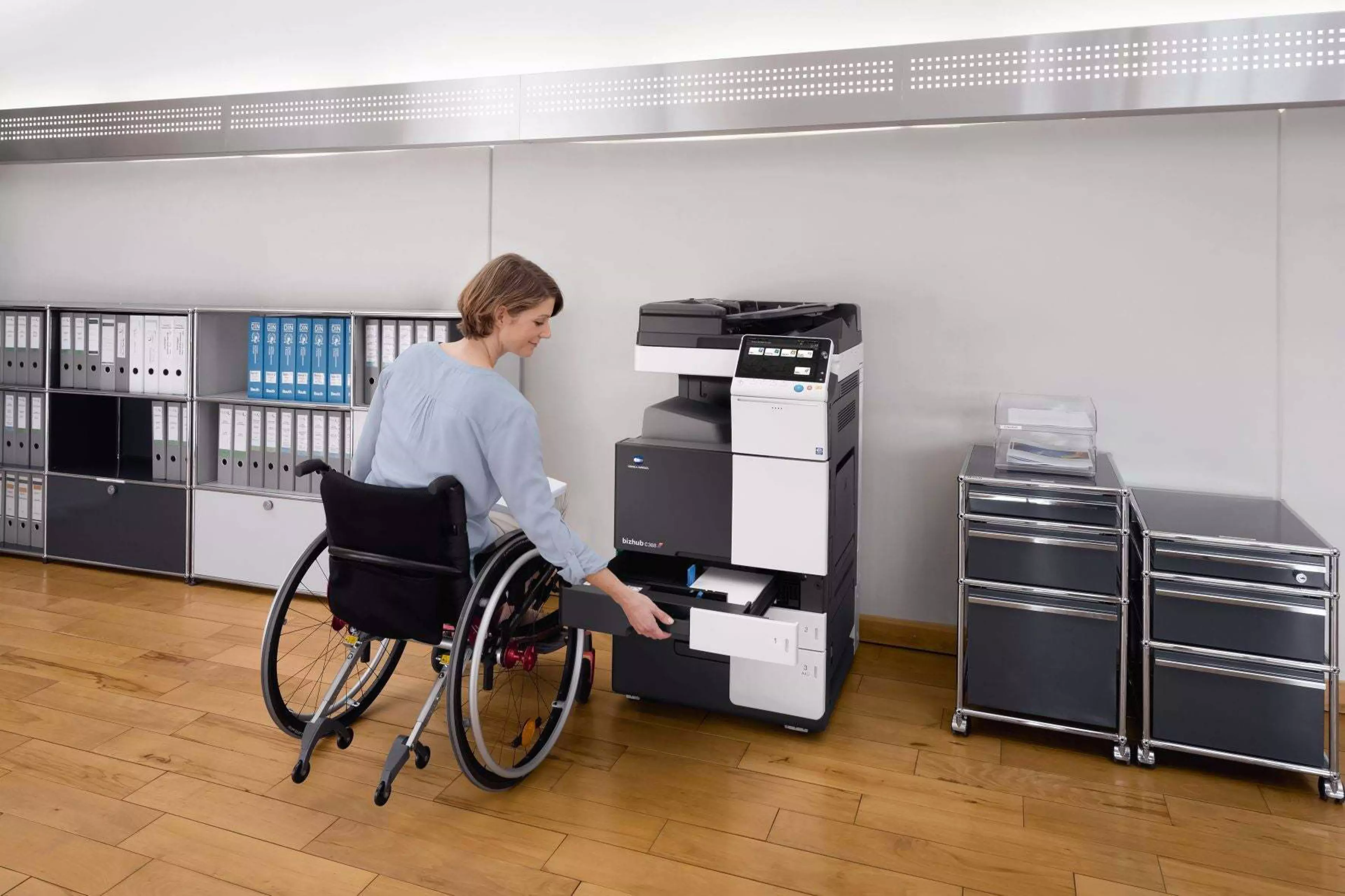
Digital Accessibility: A Key to Inclusion and Equal Opportunity in the Workplace

When boundaries disappear - how healthy is hybrid working for mental health?

Where is the best place to work: in the office or at home and how to reach a compromise between employee and employer wishes?

The EU CSDDD: Responsibility along the supply chain
CSRD reporting for SMEs – in just a few steps with AI
Three digitalisation initiatives that have a positive impact on an organisation’s sustainability

Five ways to clean up your data ‘junk' and save energy

Just how sustainable are data centres and Cloud Services?
Six ways to reduce the environmental impact of your print infrastructure

How can you help to reduce or avoid plastic waste?

Can digital transformation be sustainable?